
About Time, Care, Flow and Resistance
Bringing back my reflective posts, starting with meditations on time :)

Last May 30-31, I had the opportunity to visit a woman farmer, Nay Virgie Nazareno, and some of her fellow farmers (from the Kiday Community Farmers’ Association) and some of her family in General Nakar in Quezon province, together with Mabi David, a writer, fermenter and Advocacy & Partnerships lead at Good Food Community, and TJ Jose, a visual artist, counselor and Coordinator for The Arts and Health Institute by Magis Creative Spaces.
This visit was made possible by British Council and their 2024 Connections Through Culture grant, which we — my UK collaborator Malaika Cunningham, a practice-based researcher, artist, and co-founder of The Bare Project, and I — won last December for Hapag Ugnayan Potlucks, an international exchange with women creatives and land workers to unearth stories of connection with food, farming and the female experience.
This article reflects some of the insights from that visit, as well as thoughts and ideas that have been growing within me in the months leading up to the visit, and in the weeks since.
1. About Time
Nature has its own sense of time. And those living in right relationship with it flow with its rhythm.
A few provocations to start this reflection on Time:
What is the language we use around time, and how are our mindsets shaped around it?
What might we notice, when we step away from clock time to tune into nature’s rhythm? What new rhythms and life ways might we allow back in?
What needs to shift in our language and mindsets to be in right relationship with time?
I might not get into each question as deeply as I can, but I hope these provocations stir something in you to begin this process of re-orienting our definition and relationship with time.
1.1. What is the language we use around time, and how are our mindsets shaped around it?
Hurry up.
Time is money.
How many hours will it take you to finish?
From what time to what time will we meet?
How much time do we have to spend on this?
How can we save time on this task?
This is such a waste of time.
Can we just sit here and kill time?
We’re running out of time.
In the months leading up to our first farmer visits, in chat exchanges and an online call with Mabi, Malaika and Sally (Malaika’s colleague at The Bare Project) — which were intended as spaces for mutual learning and story exchanges on facilitation, participatory arts-based research practices, as well as unique cultural contexts (particularly around food and agriculture) — we talked about time. I love how our conversations are often quite philosophical ones, and for this one, we reflected on the language we have around time.
1.1.1. Time as a capitalist construct
Previously marked by seasons, celebrations, death or cosmological events, time had come to be defined by clock-time, or more specifically as the waged ‘labor hour’ or work-time.”
In her book, Saving Time, Jenny Odell talks about the domination of clock time over the living world. True enough, in our capitalist society, we often think about efficiencies and labor hours and if the time we devote to something is worthwhile, “sulit” — often meaning “productive”. But what of those activities that do not actively generate income? And perhaps even activities that give resources away?
In an online call with Mabi, Malaika and Sally, we pondered on the language of “spending time,” and how capitalist and colonizing it felt, especially when we reflected on how we don’t seem to really have this language in Filipino.
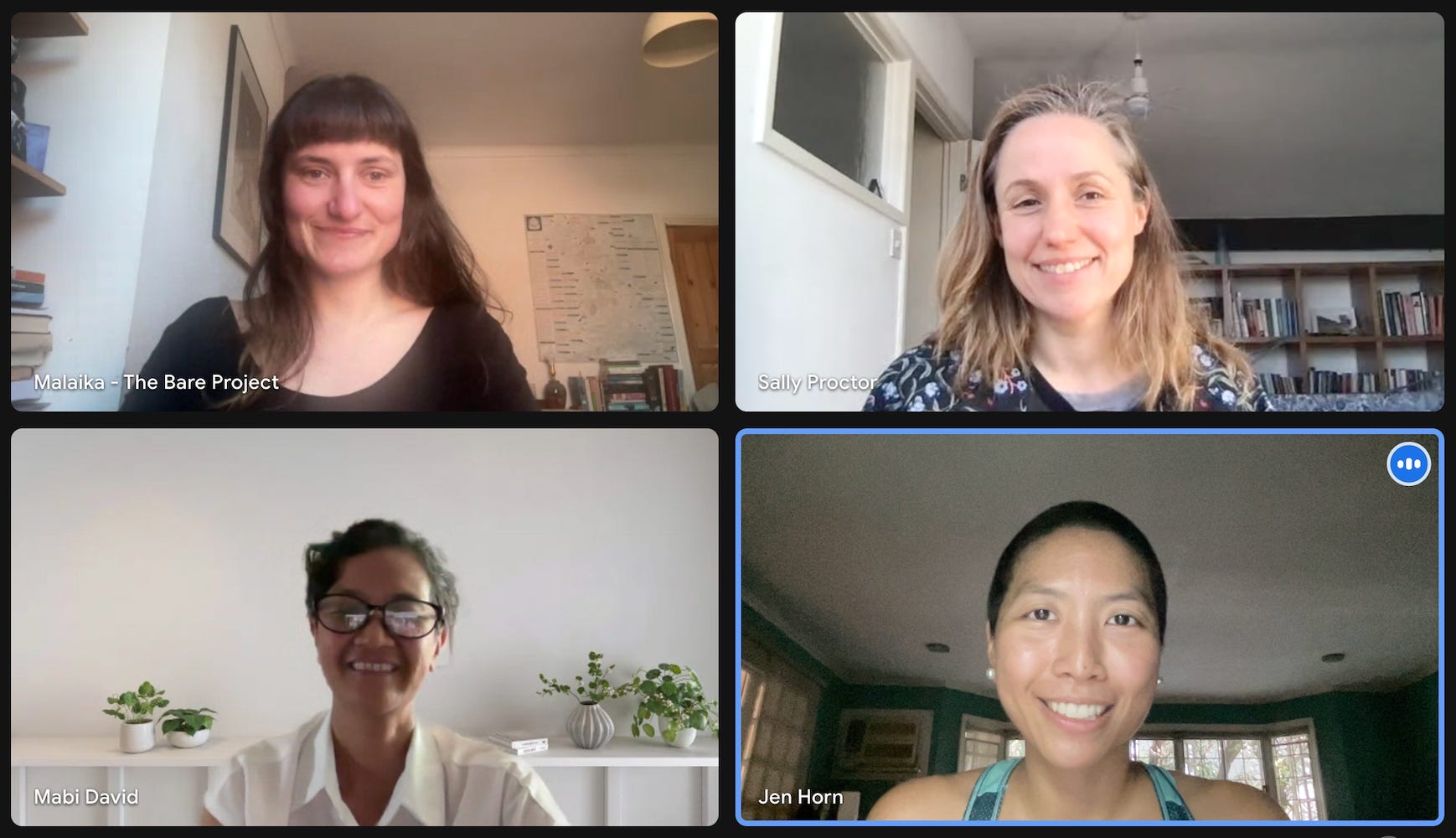
We don’t think of it in that sort of economic, scarcity-conscious mindset. In Filipino, we don’t have language for “spending” or “saving” time. We say “paglalaanan ng oras” or “giving time”. I like to think it’s because we previously saw it as a gift, not a commodity.
It’s not something we technically run out of, but can be generated when we choose to.
“Do you have time?”
I suppose we always have time, it’s just a matter of where / what / to whom we want to give that time to at any given moment. And maybe some things matter more to us than others at certain points, and so there are things we choose to give time to more than others.
After that call, we told ourselves we would be more conscious about using the phrase “spending time,” and choosing instead to be conscious about what or to whom we want to give or gift our time to.
Odell writes:
Maybe ‘the point’ isn’t to live more, in the literal sense of a longer or more productive life […] but rather, to be more alive in any given moment.
I think of the shackles of capitalist clock-time when I engage in unpaid care work and wonder about the value of the time devoted to that.
1.1.2. Time as an illusion of control
To operate in this world as it is, it feels like we need the structure, the deadlines, the time frames. We procrastinate when we can, and we hurry to make up for that “lost time”.
But what are we hurrying for, really? When we pay for convenience or design for expediency to “buy ourselves some time”, who or what are we buying time from?
In preparing for our visit to Nay Virgie, we designed how we might spend the time with them, while being mindful that they were also preparing for the Patikim Festival1 that would transpire on the second day of our visit.
So we structured three hours of our overnight stay with them, in hopes that we would find answers to certain questions in that time. It gave me comfort to design that time; gave me a sense of power and control and certainty in an otherwise very uncertain interaction. It’s probably one of the initial reasons I was drawn to facilitation many years ago.
But if there’s anything I’ve learned in my years of facilitation, its magic happens in the relinquishing of control and certainty.
When we got there, we realized that time moved differently, and that they were not as beholden to the clock as we are in the city. But it was not idyllic provincial time one might imagine either.
On the contrary, when we sat down with Nay Virgie for a conversation, she constantly sought to do something with her hands — wrap suman, make a broom, harvest cassava, etc.
Eventually, we let go of the structured time and gave way to emergence, we wound up harvesting katmon fruit, asked about what they did with it, and lightly suggested (haha) that they show us, and voila! A katmon jam-making experience transpired, and it was nothing like what we could have planned out. It was made even more special because of its unplanned nature.
When I think about it, even as we tried to mindfully design the structured time beforehand such that we would still adapt and flow with the women farmers we were meeting, structured time was our imposition — a colonization of sorts (albeit a benevolent one).
We let go of the need for certain outcomes. Instead, we flowed as house guests in their home, co-creating and being led by them as the stewards of the land.
When we let go of the tight grip of certainty, we allowed space for emergence and creativity.
1.2. What might we notice, when we step away from clock time to tune into nature’s rhythm? What new rhythms and life ways might we allow back in?
If you’ve found your way to my work through our shared values of love for nature, then you’re no stranger to the wisdom nature holds, and my love for metaphors from nature.
In nature, there’s a time for growth, decay, and evolution.
There are times to plant, times to harvest, and times to let the land to rest. There are seasons for productivity and growth, and seasons for rest and repair.
Why are we always so guilty about rest, when it’s such an essential part of nurturing our capacity to grow and care for others too?
Nature cares not for a “customer”, but it trusts its purpose.
It creates abundantly when the conditions are right, sometimes in excess, but also, in nature, nothing is wasted. Walang sayang. Fallen fruit feeds birds, ants, the soil and all the organisms in it.
It creates abundantly when the conditions are right, and trusts that it is enough work — to generate life, to nourish its kapwa, to be of value — until the next cycle.
It creates abundantly when the conditions are right, and trusts that its ecosystem will also take care of it in fallow periods. It does not create scarcely to warrant a high price, nor does it measure its labor hours to yield a harvest. It generates life because that is its organizing principle and purpose.
The times are urgent; let us slow down.
- an African proverb
Bayo Akomolafe writes:2
In ‘hurrying up’ all the time, we often lose sight of the abundance of resources that might help us meet today’s most challenging crises. We rush through into the same patterns we are used to. Of course, there isn’t a single way to respond to crisis; there is no universally correct way. However, the call to slow down works to bring us face to face with the invisible, the hidden, the unremarked, the yet-to-be-resolved. Sometimes, what is the appropriate thing to do is not the effective thing to do.
Slowing down is thus about lingering in the places we are not used to. Seeking out new questions. Becoming accountable to more than what rests on the surface. Seeking roots. Slowing down is taking care of ghosts, hugging monsters, sharing silence, embracing the weird. If a humanist response to, say, the killing of whales or police violence urges us to do more and more to stop these phenomena, the call to slow down reminds us that we do not simply act upon the world (as if the world were external to our actions, or as if we were external to it), we are the world in its ongoing action-ing. As a result, we might come to examine our complicity in class issues and how the loss of immediate connections with the ‘wilds’ renders us moderns poor spokespeople for the wellbeing of the nonhuman.
Like I said before, after my call with Mabi, Malaika and Sally, we told ourselves we would be more conscious about using the phrase “spending time,” and choosing instead to be conscious about what or to whom we want to give or gift our time to.
I also want to reclaim our time, and not have it become a commodity like in traditional economics or in the attention economy, but more like an offering in a gift economy? (Said like a true Quality Time as a Love Language girlie.)
With that, I leave the final question with you, and would love for you to leave a comment or engage in some dialogue with me about it:
What needs to shift in our language and mindsets to be in right relationship with time, and with each other?
Taking her time,
Jen
About the Patikim Festival in Quezon. https://ipam-global.org/stories/patikim-festival-a-taste-of-freedom-through-agroecology/
A Slower Urgency by Bayo Akomolafe. https://www.bayoakomolafe.net/post/a-slower-urgency